


When families begin planning for the future of a farm, the conversation often seems to come down to two choices: keep it or sell it. However, farmland succession isn’t usually that simple. For some families, keeping the entire farm in the family makes sense. For others, selling may provide the liquidity, flexibility or financial resources needed for the next chapter. And increasingly, landowners are considering options that fall somewhere in between. The goal of estate and legacy planning isn’t necessarily to preserve every acre at all costs. It’s to understand what the land is meant to accomplish, and explore the strategies that can help make that vision possible.
Here are some options to consider:
Keep the land and lease it. For heirs who want to retain farmland but don’t plan to become farmers themselves, leasing can provide an opportunity to maintain ownership while generating income. A carefully structured lease can also allow a trusted farmer or family member to continue working the land. For some families, this can create a bridge between generations and can help preserve ownership while also allowing the next generation to decide what role the land will play in their future.
Sell a portion, keep a portion. Selling all the land isn’t the only way to create liquidity. Some heirs may opt for a partial sale to allow family to generate cash for estate expenses, taxes, debt, or other investments while retaining ownership of the remaining acreage. Depending on the property and family circumstances, this strategy can provide both financial flexibility and an opportunity to preserve a connection to the land. It can also create a more manageable asset for the next generation.
Restructure ownership. Sometimes the question isn’t whether to keep the farm, but who should own which part of it and how. Multiple heirs may have different goals. One may want to farm. Another may want investment income. Another may prefer liquidity. Rather than focusing everyone into the same decision, families can explore whether ownership can be structured to accommodate those differences. That could mean dividing interests, creating different ownership arrangements or finding a financial structure that allows one heir to retain the land while others receive value in another form.
Consider conservation. For some landowners, the legacy of the farm extends beyond the family balance sheet. A conservation easement or other conservation strategy may provide a way to protect agricultural land, wildlife habitat, open space or other important characteristics of the property while maintaining ownership or generating financial value. Conservation isn’t necessarily an alternative to legacy planning, but, for some families, it can be part of the legacy they want to leave.
Change how the land is managed. Reimagining farmland doesn’t always have to require changing ownership. Families may be able to rethink how the property is used or managed. That could mean changing tenants, modifying a lease arrangement, investing in improvements, exploring conservation practices or considering complementary uses where appropriate. The main consideration is to ensure the current arrangement aligns with the family’s long-term goals.
Sell to reinvest the value. Sometimes selling farmland is the best way to honor what the land has provided. A sale can turn an illiquid asset into capital that can be divided among heirs, invested elsewhere, used to fund education or retirement, support another family business or create opportunities for the next generation. Selling doesn’t necessarily mean abandoning a legacy. The proceeds simply become part of the next chapter.
When considering what to do with a farmland inheritance, instead of asking whether it should be kept or sold, instead ask what the land can accomplish.
Estate planning professionals can find additional resources to share with clients at americanfamilyfarmland.com/farmland-support-for-professional-advisors.
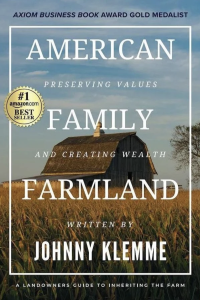
Johnny Klemme works with farm families, landowners, investors and advisors navigating the challenges of inherited farmland, succession and legacy. He explores these same themes in his bestselling book, “American Family Farmland: Preserving Values and Creating Wealth,” bringing real-world insights to audiences nationwide and helping organizations spark meaningful conversations about land, family, wealth and legacy.
If you would like to have Johnny speak at your next meeting, conference or event, or would like copies of his book for your next function, please contact Kristen Schmitt at smallpresspublicist@gmail.com.


